

 English
 中文
中文The Information Literacy Enhancement Activities for Primary and Secondary School Students and the first Robotics and Artificial Intelligence Competition were held on May 10 and May 18 at Zhonghua Middle School (Yuhua Campus). The event was jointly organized by the Municipal Education Bureau, the Municipal Association for Science and Technology, and the Municipal Fund for Science and Technology Education Activities for Students, and hosted by the Municipal Electric Education Museum (Municipal Education Information Center), with support from Zhonghua Middle School and the Nanjing Youth Science and Technology Education Association. More than 1,400 teams and nearly 3,000 students from 12 districts across the city participated.
Full Educational Coverage: 30 Competitions Inspire Diverse Technological Creativity
As a benchmark event for AI-powered education in Nanjing, the competition was divided into four sections: digital creation, computational thinking, robotics competition, and artificial intelligence. These included 30 sub-events such as 3D creative design, virtual world programming, and the VEX Robotics Challenge—covering every educational stage.
The Information Literacy activities carried the theme “Jinling Ancient Charm, Digital Innovation.”
|
|


· Elementary school students created works such as “Digital Jinling,” blending the Ming City Wall with the Metaverse, as well as AR/VR projects like “A Virtual Tour of Jinling’s Historical Sites.”
· Middle school students designed IoT-based environmental monitoring solutions addressing local needs.
· High school students focused on social issues such as AI-enabled agricultural monitoring and cultural relic restoration.
These works reflected imagination, practicality, and depth—aligned with the cognitive levels of each age group.

|
|


|
|


|
|


Robotics and AI Competition Highlights
The elementary group focused on inspiring programming interest, the middle school group emphasized technical application and logical progression, while the high school group demonstrated advanced skills through complex mechanical design and AI algorithm development.
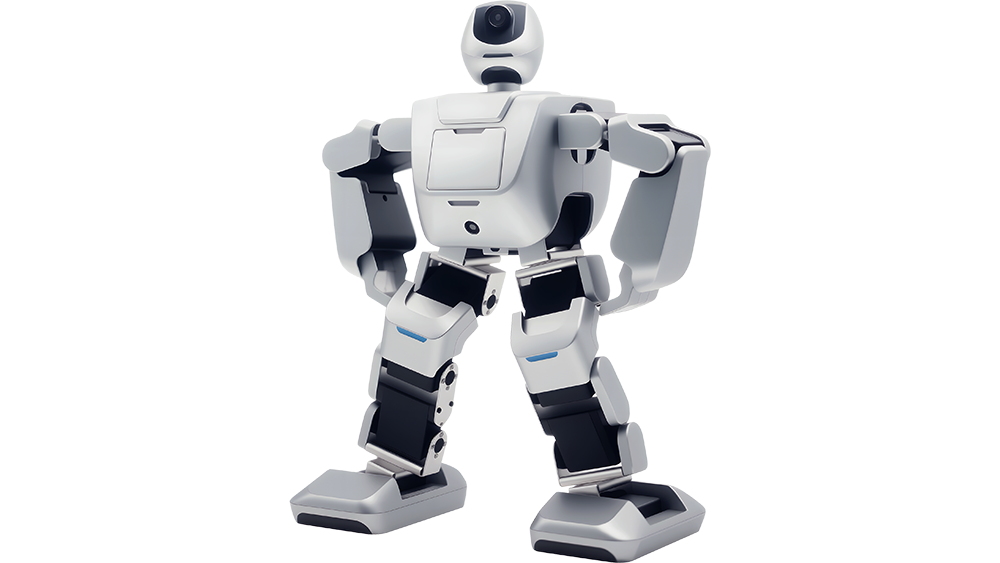
On stage, two humanoid robots and one robotic dog stole the spotlight. The humanoid robots moved with agility, astonishing the audience, while the robotic dog showcased rapid movement and precise command execution—highlighting engineering excellence and becoming a crowd favorite for student selfies.

|
|


International Standards and Local Innovations
The competition aligned with international standards by incorporating classic events from global robotics championships, while also introducing localized challenges. Project topics balanced international perspectives with real-world needs such as disaster response and resource management.
Team-based collaboration was emphasized, requiring participants to jointly complete tasks such as on-site programming and hardware debugging. This format significantly enhanced computational thinking, engineering practice, communication, and teamwork.
Outstanding teams will represent Nanjing in provincial and international competitions, benefiting from the integration of AI education with global innovation.


“Practice + Innovation” Dual Drive: The ‘Nanjing Model’ of Education
The competition was not only a showcase of skills but also a testing ground for advanced educational concepts. Students transformed classroom knowledge of AI and programming into practical skills, strengthened teamwork, and experienced the power of collective creativity.
|
|


One high school VEX team even gave up their spot in the national chemistry Olympiad to compete here. Their teacher, Mr. Li, explained:
“The students are eager to explore robotics innovation. This competition connects us with cutting-edge technology and outstanding peers—an opportunity that is rare and valuable.”
|
|


Equally inspiring was the participation of a special team of deaf students. Despite communication barriers, they collaborated through sign language, writing, and mutual understanding. After completing their project, they signed a victory gesture—met with spontaneous applause from the entire hall. The moment perfectly embodied both the warmth of technology and the fairness of education.
|
|


Building a Complete Training Chain
Nanjing has created a full training ecosystem of “curriculum popularization – competition enhancement – practical application.” By strengthening teacher capacity and building multi-level competitions, the city provides students with an innovative stage for learning, competing, and applying. This integrated loop enables science and technology education to take root in schools.